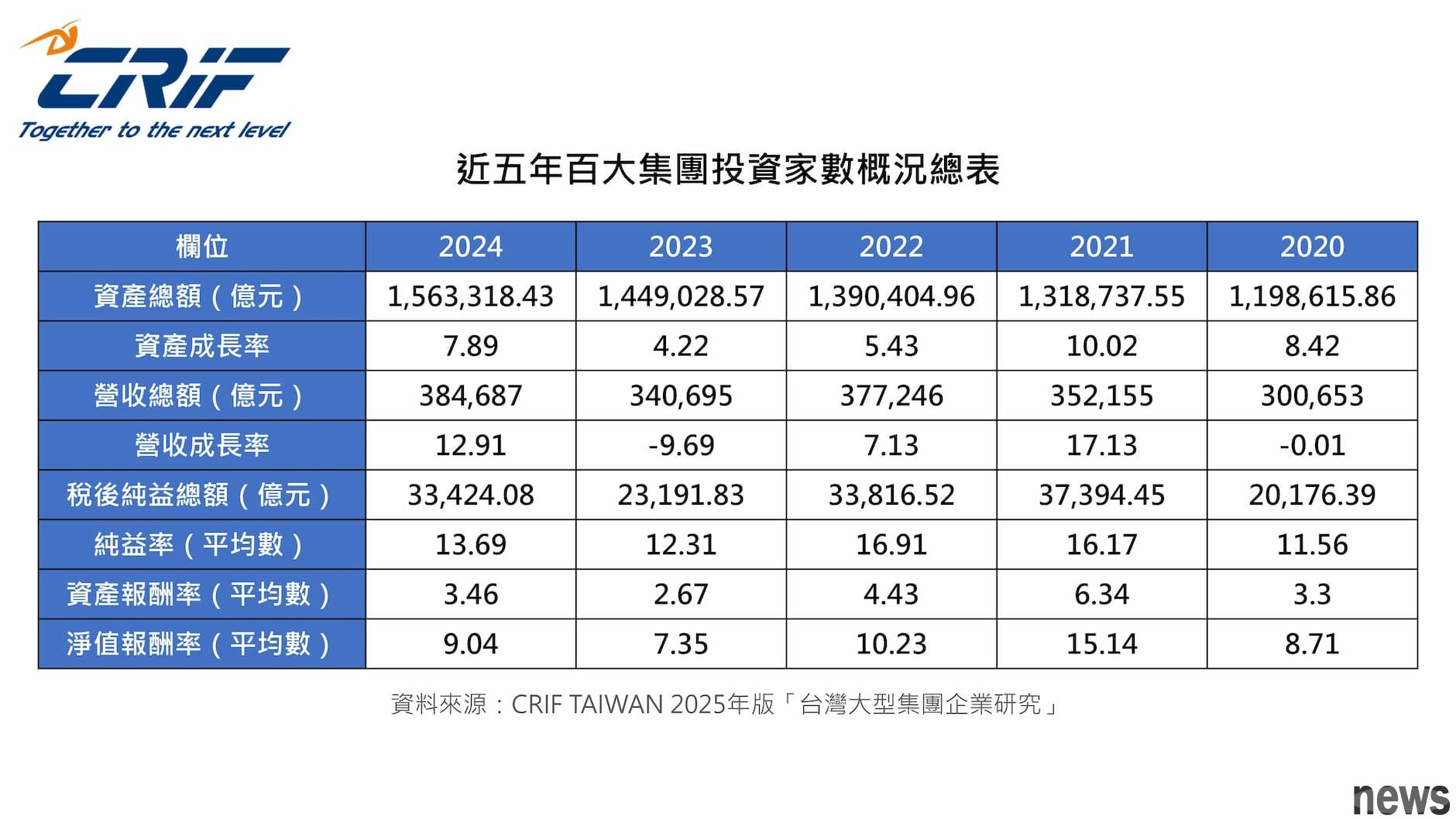
According to CRIF's "2025 Edition of Taiwan Large Group Enterprise Research" survey, as the performance of the two major terminal consumer markets in the United States and China is close to expectations, leading the world economy through the trough of the business cycle and supporting the growth curve of the top 100 groups, the total assets of the top 100 groups in 2024 will reach 156 trillion 331.8 billion yuan, and total revenue will reach 38 trillion 468.7 billion yuan, both hitting record highs.
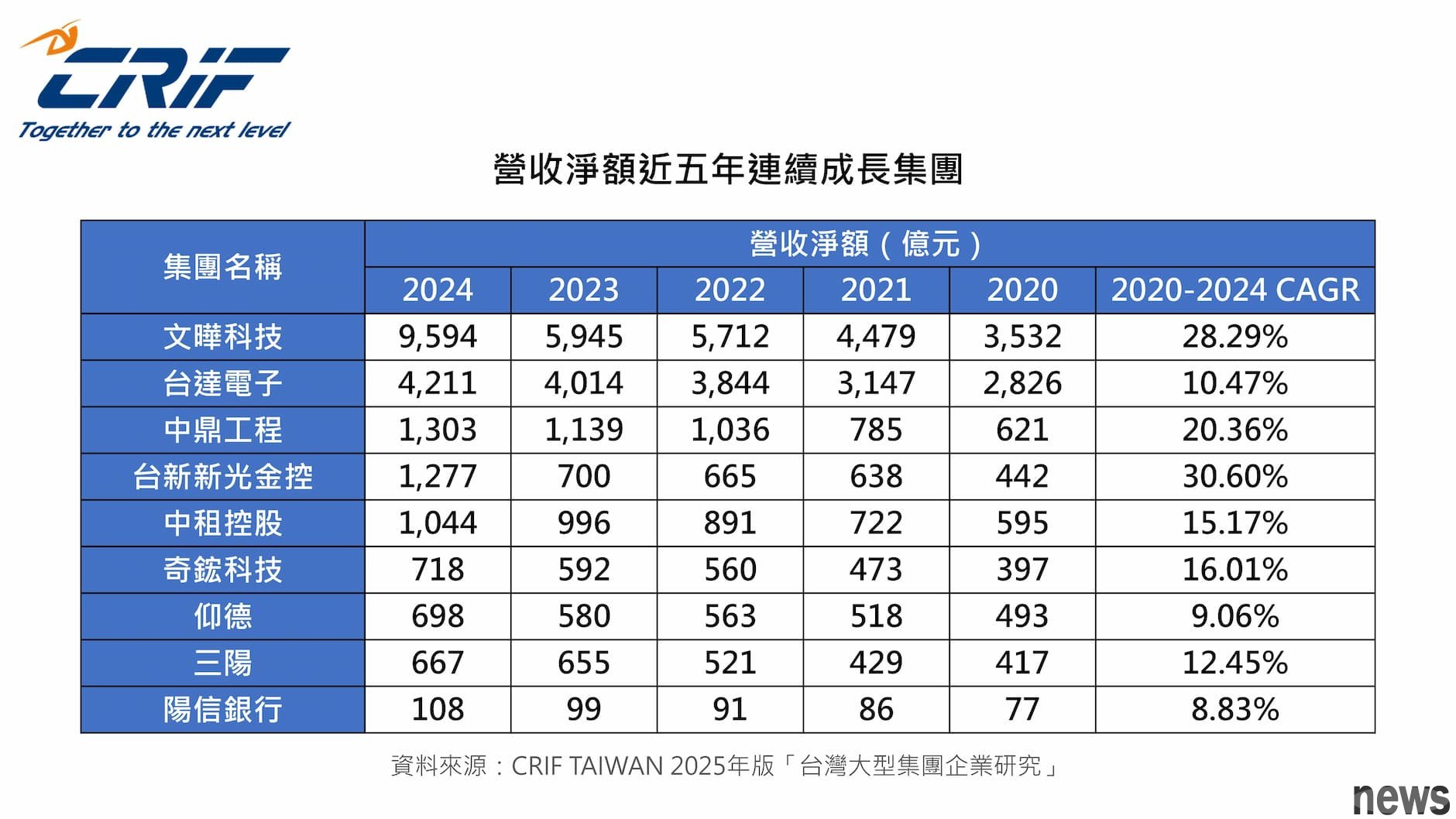
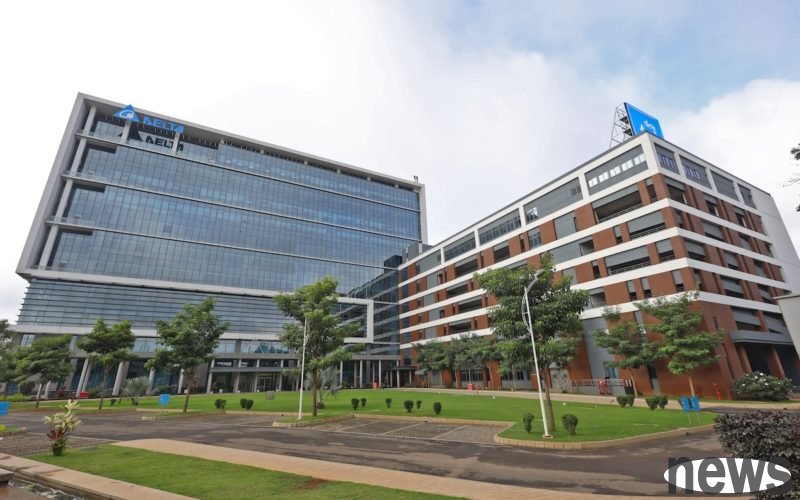
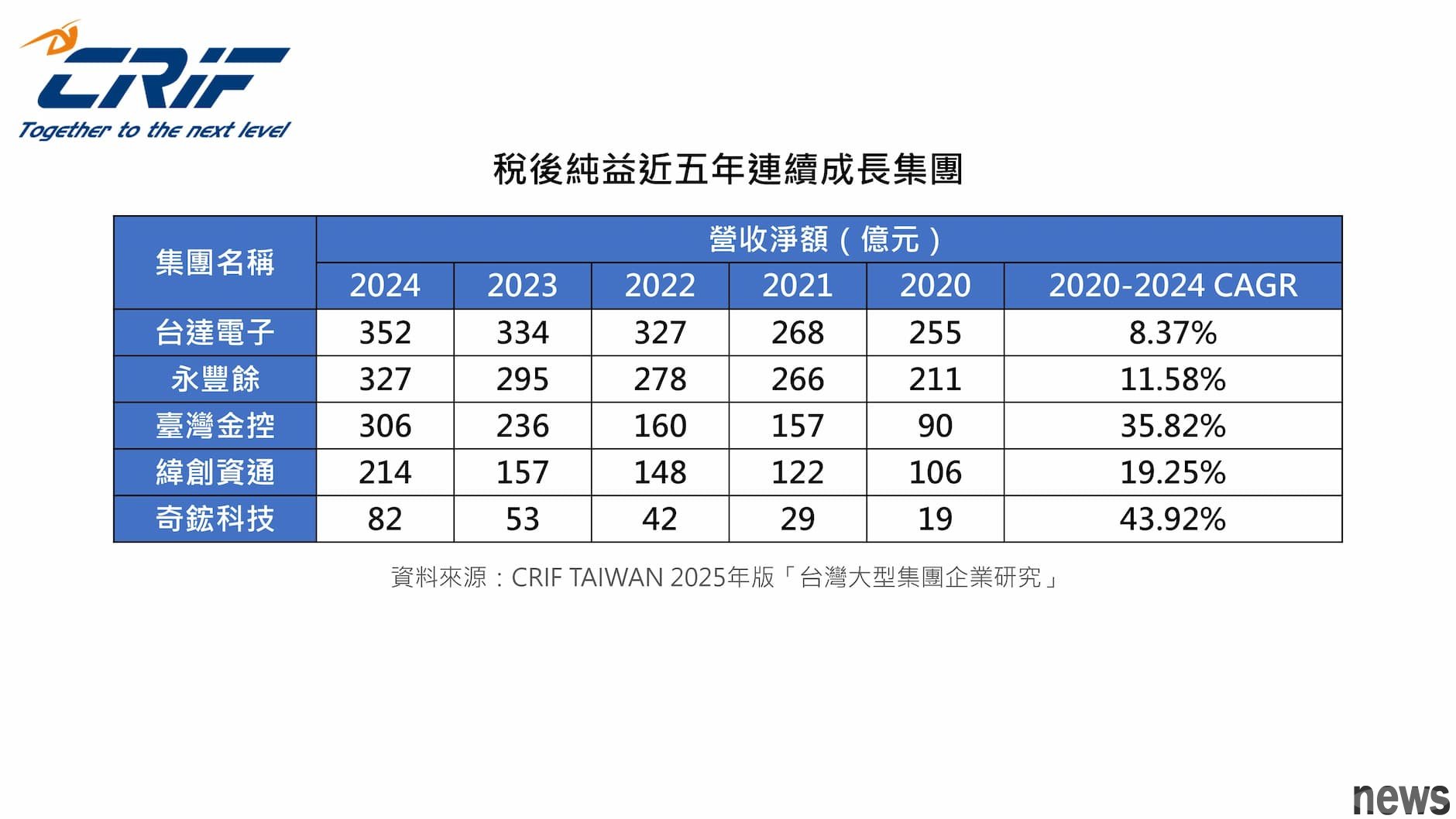
Looking at the details of the continuous increase in the number of subsidiaries, the number of companies in the top 100 groups in Europe and the United States has increased by more than 100, and the supply chain has changed significantly. The total assets of Taishin Shin Kong have jumped to the top five, and Wenye has consolidated overseas. Benefiting from the huge wave of AI that has boosted the trend of electronic components and cooling solutions, Delta Electronics and Qihong have grown into the "only two" companies in the past five years at five consecutive rates, and their global layout has expanded and is mutually beneficial.
The total number of molecule enterprises of the top 100 groups has reached a record high of 9,574. There are a large number of new and abolished molecule entrepreneurs every year, and they continue to rise at an average annual compound growth rate of 2.38%, which simultaneously reflects the expansion pace of total assets. However, the number of Chinese investors has shrunk for two consecutive years, and the number of overseas investors has increased from 3,151 in 2020 to 3,683 in 2024, with an average annual compound growth rate of 4%.
The overall number of investors in the ASEAN and European and American regions has been higher than that in China (including Hong Kong and Macao) for two consecutive years. The supply chain has shifted significantly. Due to factors such as insufficient post-epidemic economic recovery and lower-than-expected domestic demand, statistics show that the number of investors in China fell by 3.8% compared with five years ago. In contrast, the number of investors in the ASEAN region has increased by 27.67% in the past five years, North America has increased by 24.25%, and Europe has increased by 41.80%.
The number of companies in the top 100 groups in Europe and the United States has increased by more than 100. Among them, Wenye plays an important role in the overseas expansion of the top 100 groups. It merged with Canada's Future Electronics and became the global leader in the IC channel. There are only 14 other overseas investors, of which 6 were contributed by Wenye's merger with Canada's Future, accounting for 42.86%. Through the merger, Wenye entered the field of industrial control vehicles and increased gross profits.
The survey shows that the overall asset revenue of the top 100 groups is stable, the supply chain is shifting to focus on overseas expansion, and other changes. The trend of group consolidation and the continuous increase in the performance of five groups are all important driving forces for the development of Taiwan's industry and supporting the influence of the top 100 groups. First, the merger of Taishin Shin Kong Financial Holdings; Sino-Fung Financial's merger with Beijing and Cambodia Amret; and Wenye's merger with Future Electronics are all very critical.
The top 100 groups will be on the expansion trend in 2024. Two major groups have maintained asset growth rate, revenue growth rate, after-tax net income growth rate, net profit rate, and return on net worth for five consecutive years, with five consecutive years of positive growth. They are Delta Electronics and Qihong Technology. This shows the excellent corporate governance resilience in the face of rapid changes in business cycles, and proves that the top 100 groups are at the forefront of the AI trend.